Home › Sitework and Structural Concrete
We provide sitework and structural concrete services in San Jose, TX, including walls, piers, grade beams, and equipment pads. Our crews follow engineered details and coordinate with other trades on tight schedules. Get reliable structural concrete that forms the backbone of your commercial project.
Superior Concrete San Jose provides professional structural concrete throughout San Jose, TX, Texas and the surrounding area. Our licensed, insured crew delivers safe, clean, on-time work with a free estimate before anything begins. Call (956) 857-9315 or request your free quote.
Sitework and Structural Concrete for San Jose, TX Properties
Superior Concrete San Jose handles sitework and structural concrete for homes, ranches, metal buildings, barndominiums, and light commercial projects in and around San Jose, TX. Our focus is on building concrete that actually matches the clay soils, shallow rock, and drainage patterns that are common in this part of Texas.
When we say “sitework,” we are talking about the prep that happens before any concrete is placed. That includes clearing, stripping topsoil where needed, shaping the pad, checking elevations so water leaves the building, and compacting the subgrade. Structural concrete is the part that carries the weight of your building, vehicles, or equipment. That includes slabs, beams, grade beams, thickened edges, footings, and pier caps.
Around San Jose, TX you see a mix of older slab-on-grade homes, new metal buildings, small businesses along local highways, and rural properties with shops and barns. Each type of structure needs different reinforcement, thickness, and layout to avoid cracking, movement, or standing water. We design and build with that local pattern in mind instead of using a one-size-fits-all layout.
How We Prepare Your Site Before Concrete Goes In
Good structural concrete starts with solid sitework. Our crew begins with a walk of the property to spot low spots, soft ground, existing utilities, and access routes for trucks and equipment. In this area of Texas, it is common to deal with spots of caliche, pockets of expansive clay, and uneven terrain, especially on rural tracts. We mark cut and fill areas so water will flow away from the slab, not toward it.
We then clear grass, brush, and topsoil from the building pad and any drive areas that will receive structural concrete. Organic material is removed because it decays and can cause voids under the slab. The subgrade is leveled, moisture conditioned if needed, then compacted using plate compactors or rollers. We typically target 95 percent compaction for structural slabs so that the concrete has a stable base.
On some San Jose, TX properties the native soil is not ideal for supporting higher loads, like for shops that will hold heavy trucks or equipment. In those cases we may recommend a select fill pad or a layer of compacted base material (like crushed limestone) under the slab. This costs more up front but reduces the risk of settlement and structural cracking later.
We also install any needed underground sleeves and conduits before concrete placement. That may include plumbing lines, electrical conduits to islands or future walls, and sleeves for water or irrigation lines. Planning these routes during sitework helps avoid cutting into your structural concrete later just to add a line or drain.
Structural Concrete: Slabs, Beams, Piers, and Reinforcement
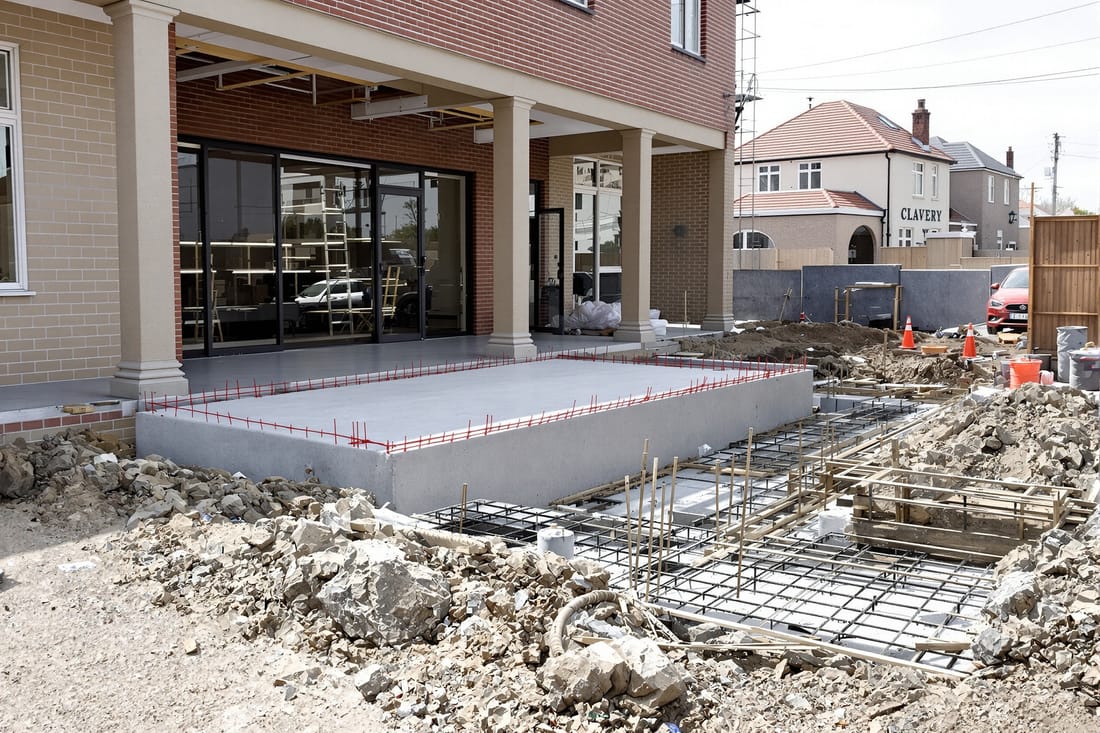
Once the site is ready, Superior Concrete San Jose sets the forms for the slab or structural element. We use laser levels to check elevations so floors are flat and drainage slopes are correct. For a typical residential or light commercial slab in the San Jose, TX area, we lay out grade beams or thickened edges around the perimeter and sometimes interior beams where loads are higher or soil conditions call for it.
Reinforcement is where many projects are underbuilt. We install rebar cages in beams and a grid of rebar or welded wire reinforcement in the slab portion, based on load needs and soil reports when available. For barndominiums and metal shops, we often use #4 or #5 rebar at closer spacing in truck bays or lift areas. We use rebar chairs or dobies so steel stays at the right depth instead of sinking to the bottom of the pour.
Concrete mix design matters in this climate. For structural concrete we typically specify a mix in the 3000 to 4000 psi range depending on the use, sometimes higher for heavy equipment or commercial-grade work. We account for hot South Texas weather by timing pours earlier in the day, using proper water content, and sometimes using admixtures that improve workability without weakening the slab. Adding water on site just to make it easier to spread is a common mistake that can reduce strength and increase cracking.
After the pour, we use screeds and power trowels to achieve the desired finish. Structural areas like equipment pads may receive a broom or lightly textured finish for traction, while interior slabs might be troweled smoother for future flooring. We install control joints and expansion joints at proper spacing so that when concrete does move, it cracks in a planned straight line instead of randomly across the surface.
What Affects Cost and How We Handle Common Problems
Several factors drive the cost of sitework and structural concrete in San Jose, TX. Site access is a big one. If mixer trucks and finish machines can reach the pad directly, costs stay lower. If everything has to be pumped a long distance or moved with smaller equipment, that adds labor and equipment time. Soil conditions also affect cost. Areas that need significant fill, undercutting of soft material, or lime treatment to stabilize clays will be more expensive than a simple scrape and compact.
Thickness and reinforcement level are major cost drivers. A basic residential slab for light use is cheaper than a heavily reinforced shop floor built for loaded trucks or farm equipment. Choosing the right level up front avoids paying for overkill or dealing with structural failures that are far more expensive to fix later. Superior Concrete San Jose will walk you through what you actually need based on how the structure will be used.
Common issues we see include poor drainage around older homes and buildings, undermined edges where runoff has cut into the soil, and cracks caused by previous contractors skipping proper compaction. When we repair or extend existing structural concrete, we often need to tie new rebar into the old slab or beam, improve drainage with swales or surface grading, and sometimes add a thickened edge or grade beam to support new loads.
We also pay attention to utilities and permitting. For many rural San Jose, TX projects, there may not be a formal engineer’s plan. In those cases, we rely on code guidelines, our experience in this soil, and clear explanations to the owner about what we are building and why. For commercial and some residential projects, we follow the structural drawings and coordinate with engineers when field conditions differ from the plans, such as hitting shallow rock where a deeper beam was drawn.
What San Jose, TX Customers Should Decide Before We Start
If you are planning a project that needs sitework and structural concrete, it helps to decide a few things before we mobilize. First, think through how you will use the space over the long term. For a shop slab, will you ever add a lift, a heavy storage rack, or park loaded trailers on it? For a house or barndominium, will you add on later or convert part of the building to living space? These choices affect beam layout, slab thickness, and reinforcement.
Second, consider drainage outside the slab, not just inside the building. We can shape the site and concrete to move water away from doors and edges, but we need to know where that water can safely go. Around San Jose, TX, it is common for rural lots to have a natural low area or county ditch that can be used if properly graded. On smaller in-town lots, there may be shared drainage paths between properties that we need to respect.
Third, set a realistic timeline around weather and cure time. Structural concrete gains strength over several days and weeks. For heavily loaded slabs and drive areas, we will advise you how long to keep vehicles off to avoid early damage. In hot Texas summers, we also plan for curing methods like light surface moisture or curing compounds so the slab does not dry out too quickly and develop shrinkage cracks.
Superior Concrete San Jose is available to walk your property, look at existing structures, and help you decide what level of sitework and structural concrete is right for your project. The more we can see and discuss up front, the fewer surprises and change orders you will face later.